
Iron is one of those nutrients that we often hear spoken about in terms of deficiency, especially among young women. This is because women of child-bearing age menstruate every month meaning they lose a lot of blood, which is where iron is found and needed. According to Bord Bia, it is estimated that a massive 1 in 3 women in Ireland have low iron stores with 1 in 30 experiencing iron deficiency anaemia, meaning their iron stores are depleted to the level that their red blood cells are struggling to transport oxygen efficiently around their body. This can be a real issue for women as low iron can cause extreme fatigue, affecting a person’s ability to work, study, do physical activities and just go about daily life. Other issues associated with iron deficiency anaemia and low iron levels include shortness of breath and heart palpitations which can be disruptive and frightening when experienced. I do think some people from my experience, especially as younger women, can be quite dismissive about their low iron levels and anaemia at times because I suppose they don’t see it as a big deal or as something that will cause them great harm so I think it’s important to highlight that studies have linked anaemia to infertility (1) as well as a weakening of the heart (2). Another thing that is important to note is that damage caused to the body by low iron levels is reversible by increasing our iron stores in our body, which leads me into my top evidence-based ways to increase iron levels in your diet.
1. Eat more iron-rich foods!:
Ok so this is an obvious one, but I think it’s important to highlight some iron-rich foods which you can include or increase in your diet. I think one of the most well known and arguably one of the best sources of iron in the diet is red meats such as beef, pork and lamb. In fact offal, or animal organs like kidneys or hearts, are an incredible source of haem, or easily digestible iron. I understand though that offal isn’t exactly to everyone’s taste, and that’s ok too but if you do struggle with getting enough iron, you may consider trying a steak and kidney pie or grinding up liver into a bolognese. If you find that idea repulsive, regular red meat is also quite high in haem iron and can be easily consumed in a variety of ways including in sandwiches, as part of a dinner, as part of a charcuterie board or even just to snack on. It is important to note that processed meats such as bacon, ham and salami are a type 1 carcinogen and so the consumption of these should be limited to 70g or less per day (3). Seafood and poultry are also good sources of haem iron but do not contain quite as much as red meats. Some plant foods like beans, peas, nuts, seeds, dried fruit and soy are also good sources of iron, but they contain non-haem iron, or iron which is more difficult for the body to absorb.
2. Consume vitamin C-rich foods with iron-rich foods to increase absorption
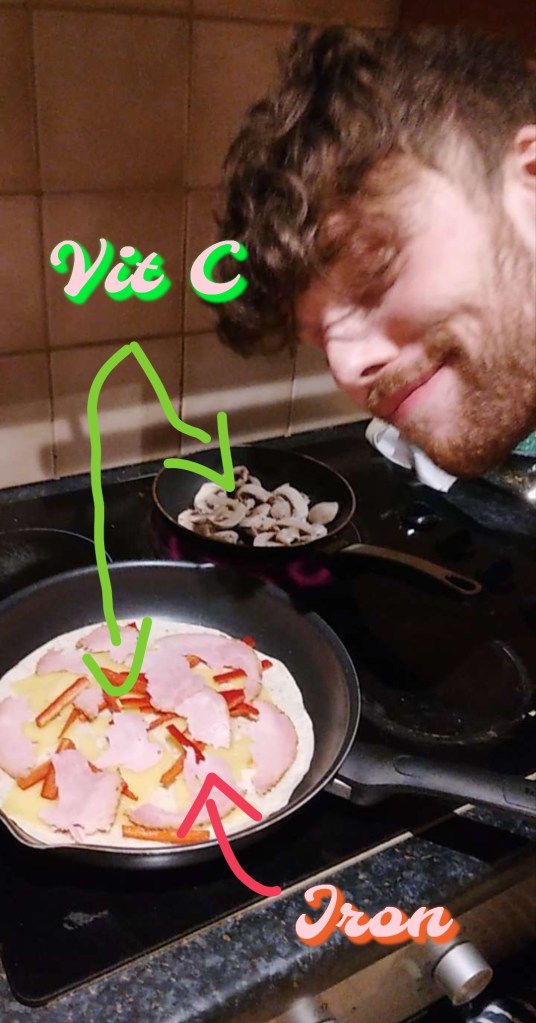
Since plant-based sources of iron can be difficult for the body to absorb, it can be beneficial to pair food sources of iron with food sources of vitamin C, which is utilised by the body to aid iron absorption. Vitamin C is found in most fruit and vegetables, including citrus fruits, strawberries, tomatoes, broccoli, cauliflower, peppers and potatoes. In fact, despite not having as much vitamin C as other fruits and vegetables, potatoes are our number 1 source of vitamin C in Ireland, as we consume so many of them. So when creating iron-boosting meals, we should work to pair an iron food with a vitamin C food. Examples include a beef stew with carrots and onions, a lentil soup with carrots, leeks and parsley, a small fry with sausages, fried tomatoes and mushrooms, a handful of nuts with an orange or some strawberries and porridge with seeds with mixed berries thrown on top.
3. Avoid drinking tea, coffee or wine until one hour has passed after your meal
All of these plant-based beverages contain compounds known as tannins, which can inhibit the body’s absorption of iron, stopping you from getting as much as you need. If you’re a regular coffee drinker (or tea drinker like myself) then it is best to leave a window of at least an hour after your meals before consuming these drinks to allow your body to absorb as much iron as possible. Herbal teas like lemon and ginger (my personal favourite), chamomile, peppermint and echinacea contain little or no tannins so if you are craving a cosy drink after a meal, maybe try switching to one of these instead.
4. Be aware of other compounds that can inhibit iron absorption
There are certain compounds in foods which have been shown in research to have an inhibiting effect on iron absorption. One example is oxalic acid, which is found in spinach, rhubarb, chard and beans which can bind to iron in the body, not allowing it to be absorbed. Phytic acid, which is found in nuts, seeds and legumes has a similar effect. Other examples include whey, casein proteins and soy protein. These compounds all have an inhibiting effect on the absorption of non-haem iron only, which is why for those struggling with low iron levels, it may be very beneficial to include some animal meat sources.
5. Supplements
If you are a vegan or vegetarian who is not consuming any haem iron in their diet and is struggling to get enough iron, it may be advisable to look into taking an iron supplement. It is also important to note that some people just have a more difficult time absorbing iron than other people, due to medical issues or just their body finding it hard, and no matter how much iron they’re consuming are still struggling with low iron stores. These people are typically prescribed an iron supplement by their doctor. In general, most people don’t really need a supplement unless they have a restricted diet, like vegans and vegetarians, or their body doesn’t absorb iron well for whatever reason. Often we can increase our iron levels by making dietary changes which is the recommended course of action. By taking small steps to include more vitamin C
rich fruit and veggies with your iron-rich animal foods, you can slowly increase your iron stores without the need of a supplement, while also getting all the other good nutrients contained within those foods.
This post is by no means a replacement for medical advice by a qualified doctor or dietitian. If you are experiencing the symptoms associated with low iron levels or iron deficiency anaemia, it is important to visit your GP so that they can give you personalised advice relating to your situation and your needs.
Links:
1: Li YQ, Cao XX, Bai B, Zhang JN, Wang MQ, Zhang YH. Severe iron deficiency is associated with a reduced conception rate in female rats. Gynecol Obstet Invest. 2014;77(1):19-23. doi: 10.1159/000355112. Epub 2013 Oct 15. PMID: 24134949.
2: Hegde N, Rich MW, Gayomali C. The cardiomyopathy of iron deficiency. Tex Heart Inst J. 2006;33(3):340-4. PMID: 17041692; PMCID: PMC1592266.
 NutritionWithMaidi