I’ve made a few changes to my diet recently for a number of reasons. For a while I felt like I lost my passion for nutrition and the science around it all mainly due to studying it in a time pressured, competitive and stressful environment. When I stepped away from all that stress to do my work placement in Dingle, possibly one of the most peaceful places in Ireland, I felt like I had the space I needed to reframe my relationship with my diet and reconnect with why I wanted to study nutritional science in the first place. On top of that, I felt like when I was in college it was difficult to make good nutritional choices which I’m sure is something that a lot of people can relate to. I was always quite busy in college and when I had free time I was stressed, so I spent a lot of my free time watching t.v., knitting, playing video games or just chatting shite to my friends, which isn’t a bad thing but I definitely didn’t prioritise other things that would have made me feel less stressed and anxious over time like exercise, sleeping at a decent hour or making myself proper meals. I think it’s all about balance, in our free time we can do things that we enjoy that’ll make us feel better quickly but we also need to work on adopting healthy habits that can lower our stress levels gradually over time (1). This is another reason that I decided that changes needed to be made to my diet and food choices. I needed to move from choosing convenient food options to choosing ones that would better support my health, mentally and physically. So, recognising that changes needed to be made, this is what I have been doing to forge a better overall diet for the last few months.
Focused on Improving my Nutritional and Psychological Education
Although I learn a lot of nutritional science in college (naturally) and also a little bit of psychology, I never really learned how to apply a lot of the information to my life. Personally, my experience of university is that I’ve learned a lot on the theory and sciences but not a lot on the practical application of all the knowledge I had gained so this was something that I really needed to improve on. I mention psychology as well as nutrition because I believe they are very interconnected in the way that forming good nutritional practices involves creating healthy habits, which often involves a basic understanding of psychology and also it’s important to note that nutrition and a lack of certain vitamins and minerals has been shown to negatively affect our moods (2). I also wanted to learn more about nutrition because I felt like I could be doing better with my diet and I needed more information on what I needed to do and how I would do it. One way I did that was I listened to a LOT of podcasts. Like a lot of podcasts. This was fairly easy for me to do as my job is making ice cream from scratch by hand, so I spent a large chunk of time cracking eggs, chopping strawberries, sticking labels on things and doing other repetitive tasks so listening to podcasts in work while doing these things was pretty easy and I learned soooo much. It’s important to note though that there are a lot of people out there who talk about nutrition who literally have no idea what they’re talking about, so it can be easy to get the wrong information. One way of avoiding this is by only listening to podcasts by registered professionals, as they will usually provide evidence based information, backed up by science and include information on what they have seen work for clients or research participants. For example, two of my favourite nutrition and health focused podcasts are Leanne Ward Nutrition, which is run by a registered dietitian, and The Food Medic Podcast, which is run by a registered doctor and qualified nutritionist. Another way of getting quality information is by putting time aside to read more books. Again, when it comes to nutrition and health it can be easy to get crappy information from pt’s who fancy themselves as nutritionists or self help gurus. This is why it’s important to stick to the professionals who have studied these areas. If you want information on diet, your information should come from a qualified nutritionist or dietitian who can back up what they’re saying through cited research and the same goes for self-help, the most reliable information is from qualified psychologists and professionals who have been in the industry for years and are experienced in these areas. I’ve learned a lot about psychology lately by reading more books and some of my favourites are How To Refuse To Be Miserable About Anything Ever by Albert Ellis and The Subtle Art of Not Giving A Fuck by Mark Manson. Education is important because we need a place to start from and we need to know that what we do will serve our needs.
More Plant-Based Foods
So a lot of the learning I’ve done this summer has been on the gut microbiome, or the miro-organisms that grow in our gut. We know that there are good microbes and bad microbes and we know that diversity, or having a range of different microbe species in our gut is really good for our overall health and aids our immune system, our digestive system and even our brain (3). Gut dysbiosis, or an imbalance of the gut microbiome, has become really common in our society and leads to symptoms like excess gas, bloating, abdominal pain, diarrhea and constipation. There are a number of reasons for this but some of the most common ones are increased stress levels, a diet low in fibre and a diet high in ultra processed foods. I personally experience a lot of gas and random bouts of abdominal pain that can get so bad that it gives me heart palpitations sometimes (I don’t know how true this is but I read somewhere that palpitations can be caused by rising gas in your stomach but don’t quote me on that) so I decided I wanted to do something about it, knowing that changes in diet can have a very beneficial effect. Our gut microbiome really benefits from a diet high in different types of fibre, or prebiotics, which can be obtained by consuming a wide variety of plant foods such as fruits, vegetables, grains, nuts, seeds, spices and herbs. I have massively increased the amount of plant foods I eat for this reason. I’ve gone from probably having like on average 3 servings of plant foods a day to having around 5-6 daily which has been really good for my belly. It is recommended that for optimum gut health, we should aim to consume 30 different types of plant foods per week as the research has shown that individuals who do this have the greatest diversity of good microbes in their gut. This has been my target and honestly, it’s easier than you might think. If I actively go out of my way to include a few plant foods in every meal by sprinkling seeds on salads or porridge, having a smoothie or a soup, buying microwavable mixed grains and things like that it isn’t too difficult and it really does make you feel good. Although my aim was to diversify my gut microbiome, the benefits of all this added fibre must be mentioned too as consuming 30g of fibre a day reduces your risk of developing bowel cancer, breast cancer, heart disease and mortality of all chronic diseases which is crazy if you think about it when around 91% of British people and 95% of Americans don’t consume enough fibre (4,5,6).
Consuming Less Ultra-Processed Foods
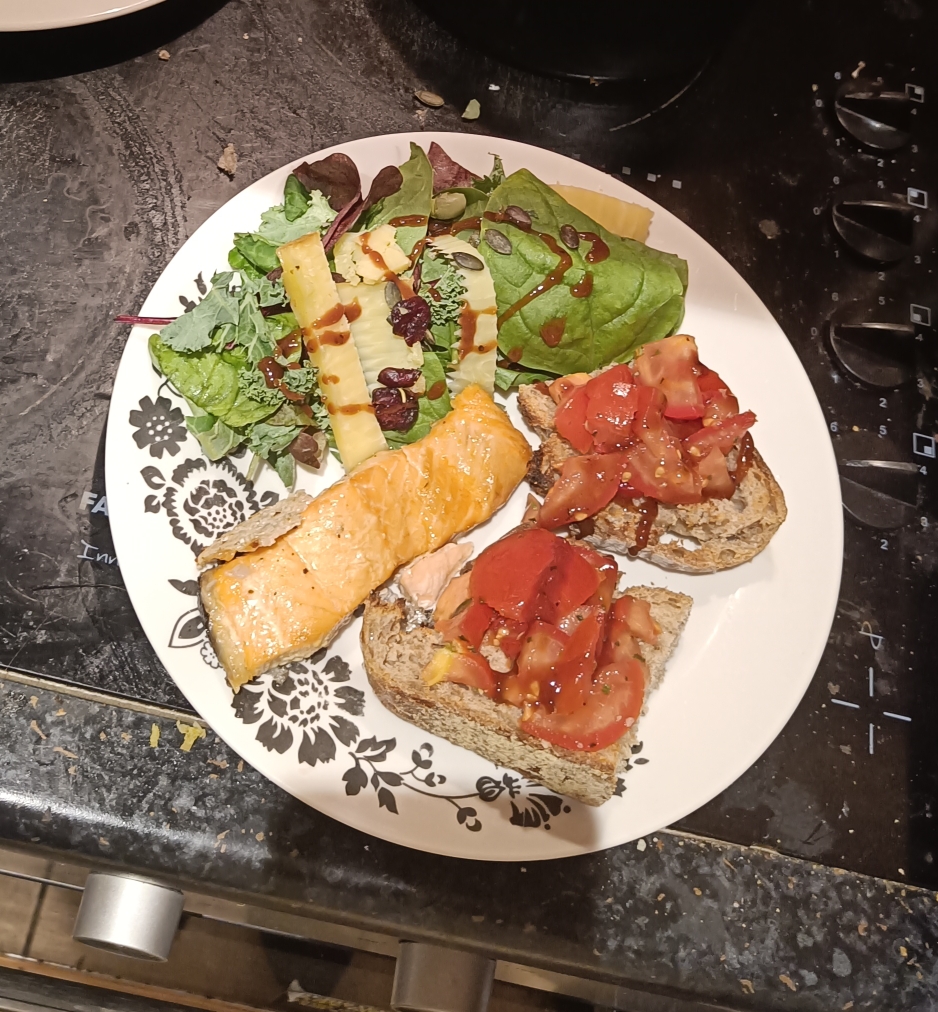
I’ve been trying to cut back on the amount of ultra-processed foods I consume simply because they don’t provide much nutrition and I feel like I need to regain my love of cooking my own foods and enjoying the real natural flavours that come from that. During the last year in college, I relied a lot on pot noodles, ready-made Tesco meals, freezer pizzas and things like that and I snacked on too much high-sugar foods like biscuits and chocolate which kind of took away my appreciation of a good, hearty home cooked meal, which really tasted better and kept me fuller for longer as well as providing much better nutrition. Ultra-processed foods also tend to be high in sugar, salt and calories while providing little satiety so it’s really better to keep their consumption to a minimum because they aren’t doing much for us. I think when moving away from a reliance on these foods it can be difficult to know where to start, especially when you don’t have a lot of spare time on your hands. I’ve found it helpful to have a few basic recipes and ingredients around that I can pull together very quickly. One example is eggs on sour dough toast, which is quick and easy and I can add any veggies I have lying around. Sometimes I’ll mash tomatoes with some virgin olive oil and mix in some salt and pepper and throw that on top or sometimes I’ll fry some mushrooms with it or just add a load of salad leaves on the side and throw some seeds on top. Also, avocado on toast is a classic here. Another one is porridge. Just get your oats and whatever milk you like, toss it in the microwave and add in whatever you have like cinnamon, a bit of honey, frozen berries, a banana, seeds, a spoon of Nutella if you’re feeling cheeky and voila easy breakfast (or lunch as I have done once or twice when I had zero food). Another thing I have done to help with this is follow a load of people on Instagram who post recipes all the time. I recently found Nicole Osinga on Instagram, who is a dietitian and she posts so many easy and cheap plant-based recipes that you could easily add meat to if you wanted to. She’s also really good for meal prepping which is something I have not mastered yet but which would be very beneficial!
Eating More Food and Not Feeling Weird About It
At the moment I work a very physically demanding job while also working 25 minutes to the production site and 25 minutes home. I’m on my feet all day and my day can include lifting 25kg bags of sugar, 20L tubs of milk, 10L bottles of water on each hand and 42 cartons of 2.5L creams. This has meant that my body needs more food in order to be able to function properly and have the energy to do this amount of work which has caused a massive increase in appetite. I usually wouldn’t have the biggest appetite and often used to have like 2 meals and a snack a day but now I need my three meals and two snacks just to satisfy my appetite and my meals are bigger too. Like I used to maybe have a bowl of granola and a banana for breakfast but now I have on a typical day a big fat bowl of porridge with a banana, flaxseeds, cinnamon and a bit of honey as well as a bowl of full fat natural yogurt mixed with frozen mixed berries. And that is nothing to be ashamed about! I think women can often be made to feel weird about the amount of food they’re eating but realistically if I had continued to eat the way I did with the amount of activity I’m doing now, I would have lost a load of weight which could potentially lead to hormonal issues, I would have definitely been a cranky bitch to be around because I would be so hungry all the time and I would have been exhausted. It’s so important to learn to listen to your body and to know that if you’re going from being pretty sedentary to being quite active and building muscle, you definitely need more food. I’ve learned not to compare my diet to anyone else’s because my “What I Eat In A Day!” suits my needs and I know from all that I have learned that it is healthy. I know where I can improve upon my diet and I will continue to do so but that is my journey and my journey alone so comparisons to anyone else’s would just be silly.
When our lifestyle shifts, it can be beneficial to take a look at our diet and see what we can change for the better for our health and wellness. I hoped this helped. 🙂
Links
- Głąbska D, Guzek D, Groele B, Gutkowska K. Fruit and Vegetable Intake and Mental Health in Adults: A Systematic Review. Nutrients. 2020 Jan 1;12(1):115. doi: 10.3390/nu12010115. PMID: 31906271; PMCID: PMC7019743.
- Li Y, Lv MR, Wei YJ, Sun L, Zhang JX, Zhang HG, Li B. Dietary patterns and depression risk: A meta-analysis. Psychiatry Res. 2017 Jul;253:373-382. doi: 10.1016/j.psychres.2017.04.020. Epub 2017 Apr 11. PMID: 28431261.
- Martin CR, Osadchiy V, Kalani A, Mayer EA. The Brain-Gut-Microbiome Axis. Cell Mol Gastroenterol Hepatol. 2018 Apr 12;6(2):133-148. doi: 10.1016/j.jcmgh.2018.04.003. PMID: 30023410; PMCID: PMC6047317.
- Aune D, Chan DS, Lau R, Vieira R, Greenwood DC, Kampman E, Norat T. Dietary fibre, whole grains, and risk of colorectal cancer: systematic review and dose-response meta-analysis of prospective studies. BMJ. 2011 Nov 10;343:d6617. doi: 10.1136/bmj.d6617. PMID: 22074852; PMCID: PMC3213242.
- Chen S, Chen Y, Ma S, Zheng R, Zhao P, Zhang L, Liu Y, Yu Q, Deng Q, Zhang K. Dietary fibre intake and risk of breast cancer: A systematic review and meta-analysis of epidemiological studies. Oncotarget. 2016 Dec 6;7(49):80980-80989. doi: 10.18632/oncotarget.13140. PMID: 27829237; PMCID: PMC5348370.
- Hajishafiee M, Saneei P, Benisi-Kohansal S, Esmaillzadeh A. Cereal fibre intake and risk of mortality from all causes, CVD, cancer and inflammatory diseases: a systematic review and meta-analysis of prospective cohort studies. Br J Nutr. 2016 Jul;116(2):343-52. doi: 10.1017/S0007114516001938. Epub 2016 May 19. PMID: 27193606.
 NutritionWithMaidi